Hay Fever: Choosing the Right Antihistamine and Nasal Spray
Hay fever is one of the most common conditions in the UK. Knowing your pollen season and choosing the right combination of antihistamines, steroid nasal sprays and eye drops can make a real difference.
Key takeaways
- UK pollen seasons run roughly from late March (tree pollen) through May to July (grass) and into September (weeds).
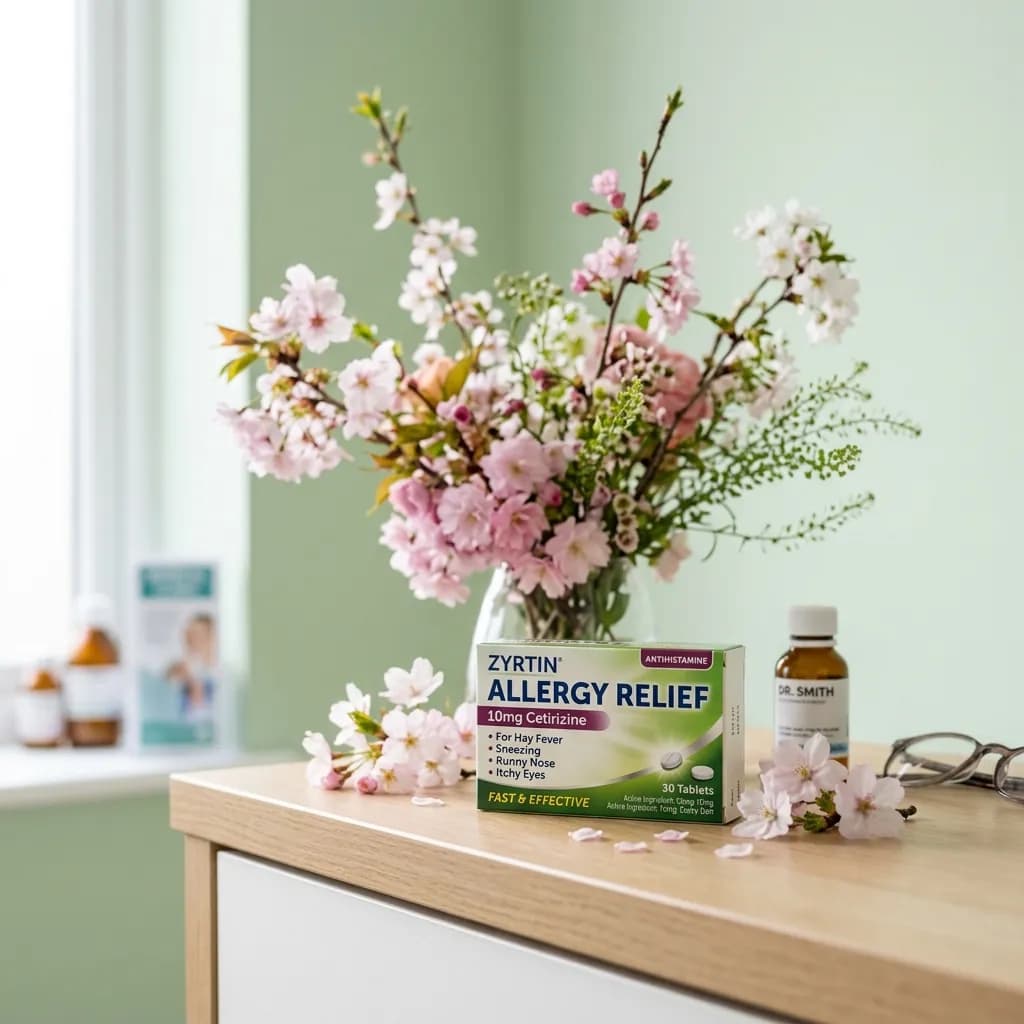
- Non-drowsy antihistamines such as cetirizine, loratadine and fexofenadine are available from pharmacies.
- Steroid nasal sprays are the most effective treatment for a blocked nose and work best when started before symptoms begin.
- Speak to a pharmacist or GP if over-the-counter treatments are not working.
What causes hay fever?
Hay fever (allergic rhinitis) happens when the immune system overreacts to pollen, releasing histamine and other chemicals. This causes sneezing, a runny or blocked nose, itchy red or watery eyes, and an itchy throat. It is very common in the UK and often runs in families, especially in people with asthma or eczema.
Know your pollen season
| Pollen type | Typical UK season |
|---|---|
| Tree pollen (such as birch) | Late March to mid-May |
| Grass pollen (affects most people with hay fever) | Mid-May to July |
| Weed pollen | End of June to September |
The Met Office publishes a daily pollen forecast. Counts tend to be highest on warm, dry, breezy days and in the early morning and evening.
Antihistamine tablets
Antihistamines block the effects of histamine and help with sneezing, itching and a runny nose.
- Non-drowsy (second-generation): cetirizine, loratadine and fexofenadine are taken once a day. They are suitable for most adults, and some are available for children. A small number of people still feel drowsy on cetirizine.
- Drowsy (first-generation): chlorphenamine works well but often causes drowsiness. Do not drive or operate machinery if affected, and avoid alcohol.
Steroid nasal sprays
For a blocked nose or persistent symptoms, a steroid nasal spray such as beclometasone, fluticasone or mometasone is usually the most effective treatment. They reduce inflammation and take a few days to work fully, so start using one two weeks before your usual season if you can.
Technique matters: tilt your head slightly forward, aim the nozzle towards the outer side of your nostril (away from the middle), and sniff gently. Use it every day during the season, not just on bad days.
Eye drops
Antihistamine or sodium cromoglicate eye drops can relieve itchy, watery eyes. Your pharmacist can help you choose, especially if you wear contact lenses.
Reducing your exposure
- Put petroleum jelly around your nostrils to trap pollen.
- Wear wraparound sunglasses outdoors.
- Shower and change clothes after being outside.
- Keep windows and doors shut when the pollen count is high.
- Avoid drying washing outside on high-pollen days.
When to get more help
See a GP if your symptoms are not controlled by pharmacy treatments, if you get wheezing or breathlessness (which can be a sign of asthma), or if you need treatment while pregnant or breastfeeding. Some people with severe hay fever may be referred for immunotherapy.
Sources and further reading
- Hay fever — NHS (https://www.nhs.uk/conditions/hay-fever/)
- Allergic rhinitis — NICE Clinical Knowledge Summaries (https://cks.nice.org.uk/topics/allergic-rhinitis/)
- Pollen forecast — Met Office (https://www.metoffice.gov.uk/weather/warnings-and-advice/seasonal-advice/pollen-forecast)
- Hay fever — Allergy UK (https://www.allergyuk.org/types-of-allergies/hayfever/)
Content reviewed on 26 October 2026 against current UK guidance. Guidance and eligibility can change; always check the linked sources for the latest information.
This healthcare guide is published for health literacy and educational purposes and does not replace personalized medical advice from a doctor or pharmacist. If you experience sudden, acute symptoms (such as crushing chest pain, signs of stroke, severe breathing difficulty, or an acute allergic reaction), call 999 immediately or visit your nearest Emergency Department. For non-urgent medical advice, call NHS 111 or consult our clinical pharmacists.